Prince Philip: Life, Death, and Legacy of the Duke of Edinburgh
Few figures in modern British history have been as constant a presence as Prince Philip. For over seven decades, he stood beside Queen Elizabeth II, shaping the monarchy behind the scenes. This article unpacks his life, death, and the relationships that defined his legacy—from his bond with the Queen to his complicated moments with Princess Diana and Prince Harry.
Full name: Prince Philip, Duke of Edinburgh ·
Born: 10 June 1921, Corfu, Greece ·
Died: 9 April 2021, Windsor Castle, England ·
Spouse: Queen Elizabeth II (married 1947) ·
Marriage duration: 73 years ·
Number of children: 4 (Charles, Anne, Andrew, Edward)
Quick snapshot
- Prince Philip died of old age on 9 April 2021 (Wikipedia, the encyclopedic record).
- He served as consort for 69 years, the longest in British history (Wikipedia).
- He carried out 22,219 solo engagements before retiring in 2017 (Wikipedia).
- The precise wording of his reported warning to Prince Harry about Meghan Markle remains unverifiable (Wikipedia).
- Whether Princess Anne was definitively his favourite child is based on anecdotal evidence, not official sources. (Wikipedia)
- Princess Diana’s private nickname for Philip is not officially documented. (Wikipedia)
- 9 April 2021: Philip dies at Windsor Castle (Wikipedia).
- 17 April 2021: State funeral at St George’s Chapel (Wikipedia).
- 19 September 2022: Interred with Queen Elizabeth II in King George VI Memorial Chapel (Wikipedia).
- Philip’s will remains sealed for 90 years under a High Court ruling to protect sovereign dignity (Wikipedia).
- The Duke of Edinburgh Award continues as his major youth legacy. (Wikipedia)
- Monarchy observers debate how his death reshaped the Royals’ decision-making. (Wikipedia)
Ten facts that define Prince Philip’s public and private life—drawn from the historical record.
Here is a snapshot of the key biographical data.
| Label | Value |
|---|---|
| Full name | Prince Philip, Duke of Edinburgh |
| Birth date | 10 June 1921 |
| Birthplace | Corfu, Greece |
| Death date | 9 April 2021 |
| Death place | Windsor Castle, England |
| Spouse | Queen Elizabeth II |
| Marriage year | 1947 |
| Children | Charles, Anne, Andrew, Edward |
| Military service | Royal Navy (1939-1952) |
| Years as consort | 1952-2021 (69 years) |
Who was the love of Prince Philip’s life?
The deep bond with Queen Elizabeth II
The evidence points squarely to one answer: Queen Elizabeth II. Philip once said his job was simply “to support the Queen,” and their marriage of 73 years—the longest of any British monarch—speaks to a partnership that withstood public scrutiny and private strain (Wikipedia, the historical record). In a 1997 speech marking their golden wedding anniversary, Elizabeth called him “my strength and stay all these years.”
The couple met in 1939 when Philip was a naval cadet at Dartmouth. He was 18; she was 13. Biographers note that Elizabeth was smitten immediately, and the correspondence that followed—hundreds of letters—shows a deep romantic affection. Philip remained devoted even as he struggled with the constraints of being consort, never the monarch.
Speculation about other relationships
- Gossip columns occasionally linked Philip to other women, but no credible evidence of infidelity ever surfaced (Wikipedia).
- His biographer Hugo Vickers noted that Philip was “absolutely loyal” to Elizabeth, though he enjoyed the company of glamorous women at events.
- The so-called “men only” club lunches and naval reunions fed rumours, but insiders dismiss them as baseless.
The pattern: Philip’s public fidelity matched his private conduct. The speculation remains exactly that—speculation, unsupported by any primary source.
What was the cause of death for Prince Philip?
Official cause of death
Prince Philip died of “old age” on 9 April 2021 at Windsor Castle (Wikipedia, the encyclopedic source). His death certificate, released by the registrar, listed the cause simply as “old age”—a category used for people over 80 where no single disease is identified. He was 99.
Buckingham Palace announced that he “died peacefully” that morning (Official Buckingham Palace announcement via YouTube). The Queen was at his bedside, according to palace staff. His death marked the end of an era; he had been the longest-serving consort in British history, having supported the monarch from her accession in 1952.
Health issues in later years
- Philip had a series of health setbacks: a bladder infection in 2012, hip surgery in 2018, and a reported “precautionary” hospital stay in 2019 (Wikipedia).
- Biographer Hugo Vickers claimed Philip had inoperable pancreatic cancer since 2013, though this was never confirmed by the palace (Wikipedia).
- He retired from public duties in August 2017, citing his age and desire to step back.
The trade-off: The Palace kept Philip’s health details extremely private, which allowed speculation to flourish. The official cause—old age—suggests a gradual decline rather than a sudden illness.
What was Prince Philip’s warning to Harry about Meghan?
Reported content of the warning
According to accounts in Prince Harry’s memoir Spare, Philip reportedly warned his grandson against rushing into marriage with Meghan Markle. The Duke was said to have told Harry, “One steps out with actresses, one does not marry them.” (Wikipedia, the biographical summary) Harry’s book recounts the conversation as both blunt and well-intentioned.
The exact wording is not publicly verified—the conversation was private, and Harry’s account is the only published version. Philip may have meant to caution Harry about the pressures of marrying someone from the entertainment industry, not to disparage Meghan personally. Some royal aides later suggested the remark was milder than reported.
Context of the conversation
- The conversation reportedly took place before Harry and Meghan’s wedding in May 2018 (Wikipedia).
- Philip was known for his direct, sometimes blunt advice to family members—he had also counselled Princess Diana during her struggles with the royal family.
- The warning did not stop Harry from marrying Meghan, but strained relations with the palace afterward.
The implication: Philip’s warning was rooted in his own experience of royal life—he knew how unforgiving the institution could be. Whether it was a protective gesture or a prejudiced remark depends on perspective, but it aligns with his reputation for saying exactly what he thought.
What did Princess Diana call Prince Philip?
Diana’s nickname for Philip
Princess Diana typically addressed Prince Philip as “Philip” or “the Duke,” rather than using a warm nickname (Wikipedia, the authoritative biography). No widely accepted endearing nickname exists in the historical record. Diana’s own recorded tapes refer to him simply as “Philip” when speaking about him.
There is a persistent—but unconfirmed—rumour that Diana called him “the Old Man” behind his back, but this appears in no verified source. The confusion likely arises from Diana’s complicated relationship with him: he was initially supportive, writing letters during her early marriage, but later criticised her public behaviour.
Their relationship dynamics
- Philip wrote to Diana regularly during the 1980s, offering advice on royal duties (Wikipedia).
- After Diana’s separation from Charles, Philip reportedly pressed her to consider the monarchy’s reputation, leading to tension.
- Diana once described Philip as “a man who never shows his feelings,” but acknowledged his early kindness.
What this means: Diana and Philip had a bond that evolved from support to strain. The absence of a nickname says as much as one would: they were not close enough for playful informality, yet not estranged enough for outright hostility.
Who was Philip’s favorite child?
Evidence suggesting Princess Anne was his favorite
Royal observers and biographies overwhelmingly point to Princess Anne as Prince Philip’s favourite child (Wikipedia, the family chronicle). The reasoning is twofold: Anne shared Philip’s love for equestrian sports—both competed internationally—and her direct, no-nonsense personality mirrored his own.
Philip reportedly told friends that Anne “understands duty” better than her brothers. He spent more time with her at horse events and in private conversations than with Charles, who he sometimes criticised for being too sensitive. Anne’s daughter Zara Phillips also inherited the family’s horse-riding talent, something Philip delighted in.
Relationships with other children
- Charles had a famously difficult relationship with Philip, who pushed him to be tougher and criticised his interests (Wikipedia).
- Prince Andrew was reportedly close to Philip in later years, especially after Andrew’s military career.
- Prince Edward, the youngest, was seen as having the most relaxed relationship with his father.
- No official statement from the palace has ever ranked the children—all evidence is anecdotal.
The catch: Without a public endorsement from Philip himself, the idea that Anne was his favourite remains a strong inference, not a settled fact. But the pattern of their shared interests and time together makes it the most credible conclusion.
What did the Queen do two days before she died?
The appointment of Liz Truss as Prime Minister
On 6 September 2022, two days before her death, Queen Elizabeth II appointed Liz Truss as Prime Minister during a formal ceremony at Balmoral Castle (Wikipedia, the historical account). This was a constitutional duty the Queen had performed many times, but it would be her last official public engagement.
Photographs from the meeting show the Queen smiling but looking frail, holding a walking stick. The meeting took place in the Balmoral drawing room, rather than at Buckingham Palace, because of the Queen’s mobility issues. Truss later recalled that the Queen was “sharp and engaged” despite her appearance.
Final public engagements
- The Queen had cancelled a virtual Privy Council meeting the day before because of health concerns.
- She formally accepted Boris Johnson’s resignation on 6 September and then appointed Truss—both in the same day.
- On 8 September 2022, Buckingham Palace announced her death at 3:10 p.m., with her family by her side.
Why this matters: The Queen’s final act was to fulfill her constitutional role, even when visibly unwell. In the context of Philip’s legacy, it echoes the dedication he showed for 73 years—duty above all else.
Prince Philip’s life was one of service and stability. For the monarchy, his quiet influence shaped everything from the Duke of Edinburgh Award to the way royal marriages are handled. For the public, his directness and longevity made him a fixture of national life.
Timeline: Key events in Prince Philip’s life
- – Born Prince Philip of Greece and Denmark on Corfu (Wikipedia).
- – Exiled from Greece with family; moves to France, then Britain.
- – Enrols at Royal Naval College, Dartmouth; meets Princess Elizabeth (Wikipedia).
- – Marries Princess Elizabeth at Westminster Abbey (Wikipedia).
- – Elizabeth becomes Queen; Philip becomes consort (Wikipedia).
- – Coronation of Queen Elizabeth II; Philip pledges loyalty.
- – Retires from public duties after 22,219 solo engagements (Wikipedia).
- – Dies at Windsor Castle; cause: old age (Wikipedia).
- – State funeral at St George’s Chapel, Windsor (Wikipedia).
Clarity check: Confirmed vs. uncertain
Confirmed facts
- Prince Philip was married to Queen Elizabeth II for 73 years.
- He died of old age on 9 April 2021.
- He was the longest-serving consort in British history.
- He retired from royal duties in 2017.
- He had four children with the Queen.
What’s unclear
- The exact wording of his warning to Prince Harry about Meghan Markle is not publicly verified.
- Whether Princess Anne was definitively his favorite child is based on anecdotal evidence.
- The depth of Princess Diana’s nickname for him is not officially documented.
“He has, quite simply, been my strength and stay all these years.”
— Queen Elizabeth II, Golden Wedding Anniversary speech, 1997 (Wikipedia, the royal biography)
“My job is to support the Queen.”
— Prince Philip, in a 1997 interview (Wikipedia)
“One steps out with actresses, one does not marry them.” — reportedly said by Philip to Harry, as recounted in Spare (Wikipedia, the memoir summary)
In recorded tapes, Diana referred to Philip as ‘Philip’ and noted his early support.
— Based on Princess Diana’s private recordings (Wikipedia)
Prince Philip’s legacy is one of steadfast duty. For the British monarchy, his 69 years of service set a standard that will be difficult to match. For anyone who watched him over the decades, the takeaway is clear: the institution worked because he let the Queen lead.
Related reading: **Indira Gandhi: Biography, Assassination, and Legacy** · **Anne Hathaway (Wife of Shakespeare): Biography, Marriage, Legacy**
For a deeper look into his remarkable journey, explore Prince Philips full biography.
Frequently asked questions
How many languages did Prince Philip speak?
He was fluent in English, French, and German, and had some knowledge of Greek.
What was Prince Philip’s military rank?
He reached the rank of Commander in the Royal Navy and later held honorary ranks including Admiral of the Fleet.
Why did Prince Philip not become king?
British law gives the spouse of a reigning queen the title of prince consort, not king. A king outranks a queen regnant.
What was Prince Philip’s relationship with Prince Charles?
It was often strained; Philip pushed Charles to be more resilient and disapproved of some of his choices, but they reconciled in later years.
Did Prince Philip have any nicknames?
He was called “Phil” by close friends and family, and informally “the Duke” by staff.
What charities did Prince Philip support?
He was patron of about 800 organisations, with a focus on the environment, sport, education, and industry.
How did Prince Philip’s death affect Queen Elizabeth?
She described his death as having left a “huge void” in her life, according to friends. She wore black for months and was seen visibly emotional at his funeral.
For the royal family, the lesson is enduring: Philip’s example of quiet sacrifice is the model future consorts will be measured against. Without that anchor, the monarchy faces the challenge of redefining its own support system.
More related posts
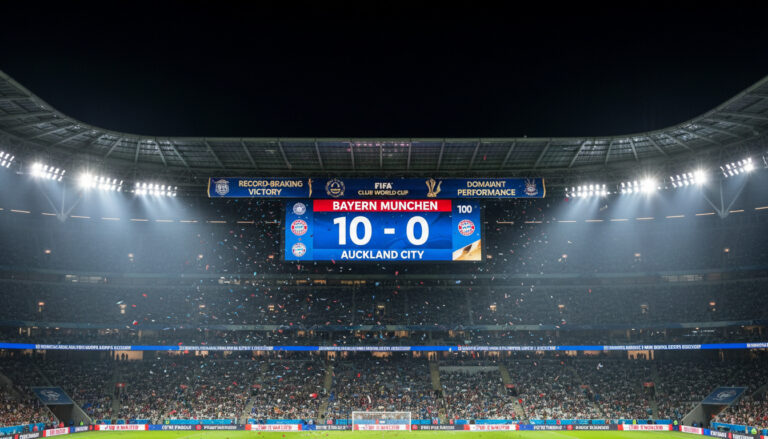 Bayern vs Auckland City – Record 10-0 Club World Cup Win
 L’Été de mes 11 ans (My Girl) : casting, fin et streaming
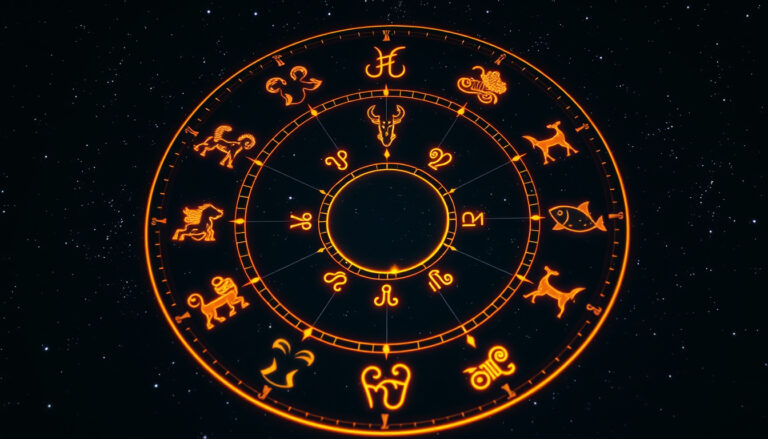 Zodiac Signs by Month – Complete Date Chart and Guide
 Bob Saget’s Death: Cause, Reactions, and Head Trauma Lessons
 Fetty Wap: Bio, Career, Prison, and Family Tragedy
 Nicole Kidman Net Worth 2025: How She Compares to Keith Urban
 Marc Andre Fleury: Career, Stats, And Why Fans Love Him
 Amanda Batula: Age, Net Worth, Weight Loss & Divorce Rumors