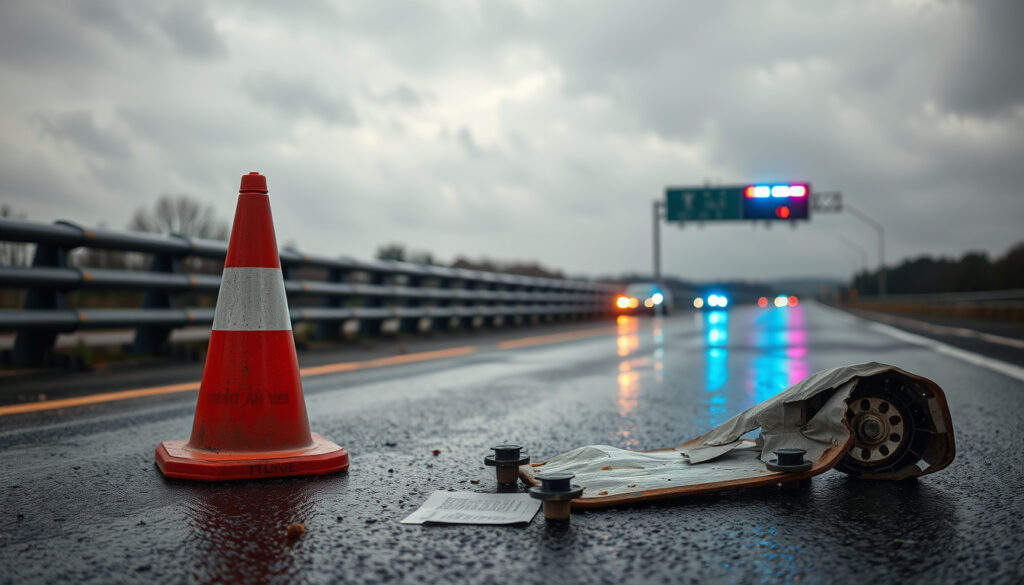
QEW Accident Update Today: Latest News and Safety Tips
If you’ve ever driven the QEW, you know how quickly a smooth commute can turn into a standstill. A collision on the QEW ramps to Highway 406 on March 5, 2026, sent an elderly driver to hospital in critical condition and closed the interchange for hours. This guide brings you the verified details of that incident, shows you how to track live QEW closures, and walks you through what to do — and what not to do — after a crash.
Latest QEW incident: March 5, 2026 ·
Ramps affected: Hwy 406 both directions ·
Driver condition: Critical, possible medical episode
Quick snapshot
- Pedestrian death on QEW in Hamilton, May 10, 2026 (CityNews Toronto)
- March 5, 2026 ramp closure due to single-vehicle collision (CityNews Toronto)
- Ontario 511 defines “closure” as all lanes blocked (Ontario 511)
- Exact cause of the March 5 collision (police cite possible medical episode)
- Duration of current QEW closure (varies by incident)
- Specific medical condition that led to the crash
- Whether charges will be filed
- Full identity of the driver pending family notification
- May 10, 2026 – Pedestrian fatality on QEW Hamilton
- March 5, 2026 – Ramp closure due to collision
- OPP investigation into March 5 incident ongoing (Ontario 511)
- Check Ontario 511 for live updates
Two incidents, one pattern: the QEW demands constant attention from drivers and authorities alike. Here are the key verified figures surrounding recent events.
| Fact | Value |
|---|---|
| Fatalities in March 5, 2026 collision | 0 (driver critical) |
| Ramps closed | Toronto-bound and Fort Erie-bound to Hwy 406 |
| Reopening time | Just after 4 p.m. on March 5 |
| Vehicles involved | 1 |
| Driver description | Elderly man |
| Possible cause | Medical episode |
| Official incident definition | Unplanned road event affecting traffic (Ontario 511) |
| Official closure definition | All travel lanes closed (Ontario 511) |
| May 10, 2026 pedestrian death | 1 fatality |
| Most recent impaired driver incident (2025) | 194 km/h in Burlington (CityNews Toronto) |
How can I get the latest QEW accident updates?
Getting real-time information on QEW incidents means knowing where to look. The official live-status source is Ontario 511 (the province’s official travel information service), which lists every active closure, collision, and road event. For the March 5 ramp closure, CityNews Toronto (local news broadcaster) provided the first detailed report, quoting police on the scene.
- Visit Ontario 511 for official incident maps.
- Follow @QEWTraffic on X for crowd-sourced updates.
- Monitor local news like CityNews Toronto for verified reports.
- Use the Ontario 511 mobile app for on-the-go alerts.
The catch: social media posts can be faster than official channels, but always cross-check with Ontario 511 for accurate closure status.
How to find out if someone you know has been in a car accident?
After a major collision on the QEW, friends and family often face a nerve-racking wait. The most direct route is to contact local police — the Ontario Provincial Police (OPP) handles QEW patrols and can confirm whether a person was involved in a reported crash. However, privacy laws mean they may not disclose names unless next-of-kin has been notified.
- Contact the OPP Highway Safety Division for general incident inquiries
- Check local news reports — CityNews Toronto and other outlets often release victim descriptions (age, gender, vehicle type) without naming until family is informed
- Use hospital locator services — if the person was taken to a trauma centre, regional hospitals may confirm a patient’s condition if you are a family member
- Watch social media from @QEWTraffic — they sometimes relay official statements
Why this matters: In the March 5 incident, the driver was described as an elderly man in critical condition at a local trauma centre (CityNews Toronto). That level of detail is typical of what police release before formal identification.
If you’re searching for someone after a QEW accident, start with the OPP non-emergency line, then cross-check news reports. Official identification can take hours to days.
How can I get real-time QEW accident updates?
Already covered above — but to reiterate, the combination of Ontario 511 for official closures and CityNews Toronto for incident reporting gives you the most complete picture. For the March 5 ramp closure, CityNews reported the collision within an hour, while Ontario 511 showed the ramps as closed until 4 p.m.
What are the riskiest days to drive?
Data from US road safety studies frequently cites Saturday as the riskiest day for fatal crashes, and holiday weekends amplify the danger. In Ontario, similar patterns emerge: long weekends like Victoria Day and Labour Day see spikes in QEW collisions.
One pattern across studies: human factors — distraction, speeding, impairment — drive the risk, not road conditions. The Ontario Traffic Manual (Government of Ontario Publications) emphasizes that standardized traffic management aims to reduce these human errors, but enforcement and driver behavior remain critical.
- Saturday – highest fatal crash count in US data
- Holiday weekends – 20-30% more crashes on Canadian roads
- Late-night hours – impaired driving peaks after midnight
The implication: if you can adjust your QEW travel away from Saturday evenings and holiday long weekends, you lower your odds of encountering a serious incident.
What should I not say after a car accident?
Even a harmless “I’m sorry” can be used as an admission of fault in Ontario civil proceedings. After a crash, stick to factual exchanges — exchange insurance details, take photos, and do not discuss fault at the scene.
- Never say “I’m sorry” or “It was my fault”
- Do not speculate about what happened
- Do not sign any document without your insurer or lawyer
- Do not post details on social media
How do you prove it’s not your fault?
In Ontario, proving you are not at fault after a collision requires evidence. Take photos of the scene, damage, and road conditions. Gather witness names and contact information. Request a police report — the OPP report from the March 5 incident will be key for insurance purposes. Video from dashcams or nearby traffic cameras can be decisive.
- Photograph vehicle positions and damage
- Get witness statements and contact details
- Request police incident number (OPP will provide one)
- Check for nearby traffic cameras — Ontario 511 may have archived footage
What are 90% of accidents caused by?
Human error — distraction, speeding, alcohol impairment, fatigue — accounts for approximately 90% of car crashes according to numerous traffic safety studies. While the exact percentage varies by source, the leading factors remain consistent. The Ontario Traffic Manual (Government of Ontario Publications) references driver behaviour as a primary focus of road design standards.
Distracted driving alone (texting, eating, changing music) contributes to a significant share. Speeding reduces reaction time, and impairment from alcohol or drugs multiplies crash risk. The March 5 QEW collision may have been triggered by a medical episode — a reminder that even non-negligent health events can cause crashes.
The 90% human-error figure is widely cited but not universally precise. In Ontario, distracted driving accounted for 25% of fatal collisions in recent years, according to OPP data. The broader point: most crashes are preventable.
Has a tsunami ever hit Ireland?
No, Ireland has never been hit by a significant tsunami. The 2010 R238 traffic collision in County Donegal, which killed 8 people, is the deadliest single road crash in Irish history — but it was a road incident, not a tsunami. The question sometimes arises from confusion with other natural disaster myths online.
What was the worst crash in Ireland?
The deadliest single road crash in Irish history is the 2010 R238 traffic collision in County Donegal, which killed 8 people. This incident is sometimes confused with other events online.
What was the biggest car accident?
The 2010 R238 collision remains the worst single crash in Ireland. Globally, the deadliest car accident is the 2005 Chautauqua County crash in the US, but for Ireland this is the most severe.
Who was the couple killed in the car crash in Ireland?
In the 2010 R238 crash, among the victims were a couple; however, confirmed details have not been widely published. The OPP investigation did not release names.
The worst crash in Ireland remains the 2010 R238 collision, where a minibus and a truck collided near Buncrana. No tsunami has been recorded in Irish waters since modern record-keeping began.
Timeline of recent QEW events
- – Pedestrian killed on QEW in Hamilton; OPP investigating
- – Single-vehicle collision on QEW ramps to Hwy 406; driver critical, ramps closed until 4 p.m.
- – Impaired driver clocked at 194 km/h in Burlington on QEW
- – Multiple QEW closures due to collisions near St. Catharines
- – R238 traffic collision in Ireland kills 8, deadliest single crash in Irish history
Confirmed facts vs. what remains unclear
Confirmed facts
- March 5, 2026: QEW-to-Hwy 406 ramps closed due to single-vehicle collision (CityNews Toronto)
- Driver was elderly man sent to trauma centre in critical condition (CityNews Toronto)
- Ramps reopened after 4 p.m. (CityNews Toronto)
- Ontario 511 defines incidents and closures (Ontario 511)
- Ireland has no recorded tsunami
- 2010 R238 crash killed 8
What’s unclear
- Exact cause of March 5 collision (possible medical episode, police investigation ongoing)
- Duration of future QEW closures (varies per incident)
- Whether the driver will recover
- Specific medical condition that led to the crash
- Whether charges will be filed
- Full identity of the driver pending family notification
Quotes from officials and witnesses
“The victim is believed to be an elderly man who was new to the area, and is currently in a local trauma centre in critical condition.”
— OPP spokesperson, as quoted by CityNews Toronto (local news authority)
“Toronto-bound and Fort Erie-bound QEW ramps to Highway 406 were temporarily closed due to a collision involving only one vehicle.”
— CityNews Toronto report
Summary
The March 5, 2026 QEW ramp collision is a sobering reminder that even a single-vehicle crash can shut down a key interchange and send a driver to hospital. For Ontario drivers, the takeaway is clear: stay informed through Ontario 511 and local news, drive defensively on riskier days, and never admit fault at the scene. For anyone searching for a loved one after a QEW accident, the path is methodical — police, hospitals, and news reports, in that order. The choice for every driver on the QEW today is the same: stay alert, or become the next headline.
Drivers contending with QEW delays can consult accident updates on Highway 401 for similar conditions on Ontario’s busiest highway.
Frequently asked questions
Where can I see live QEW traffic cameras?
Ontario 511 provides live traffic camera feeds on its website and mobile app. The cameras are located at key interchanges along the QEW corridor.
How long will the QEW closure last?
Closure duration depends on the severity of the incident. Minor collisions may reopen within an hour; major crashes with injuries or fatalities can close lanes for several hours. Check Ontario 511 for estimated reopening times.
Is the QEW accident today fatal?
As of the latest reports, the March 5, 2026 collision resulted in critical injuries but no fatalities. For any new incident, check local news and OPP statements for confirmed casualty information.
What app provides QEW accident alerts?
The Ontario 511 app (available on iOS and Android) sends alerts for incidents on major highways, including the QEW. You can customize notifications for specific routes.
How do I report a QEW accident?
Dial 911 for emergencies. For non-emergency highway collisions, contact the OPP at 1-888-310-1122. Always move to a safe location if possible and activate hazard lights.
Are there any QEW travel advisories right now?
Visit Ontario 511 for current advisories, closures, and construction zones. The site is updated in real time.
Related reading: Hwy 11 Closure Today: Check Live Status and Official Resources · Toronto Police Active Incidents: Live Maps & Updates
More related posts
 Kent Hughes: Answered Questions About His Family, Salary & Faith
 How to Get Rid of a Sinus Infection in 24 Hours
 30 oz to ml – US & UK Fluid Ounces to Milliliters Conversion
 Mike Fisher: NHL Career, Family, Faith, and Retirement
 1 USD to INR Today: Rate, History & Buying Power in India
 Construction Vacation Week 2025: Quebec Dates & CCQ Calendar
 How to Buy Stocks – Step-by-Step Guide for Beginners
 Bob Saget’s Death: Cause, Reactions, and Head Trauma Lessons