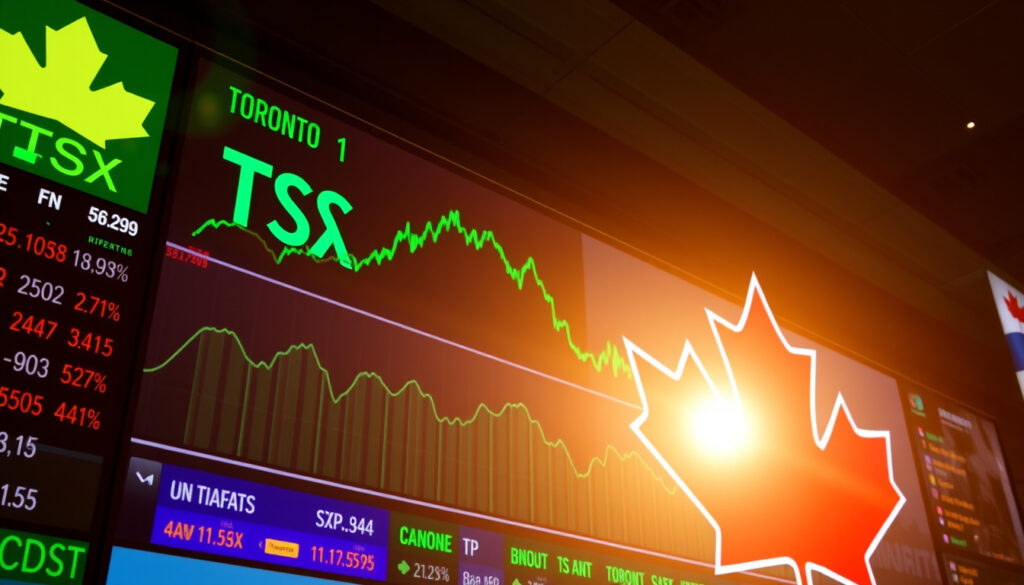
Canadian Stock Market Today: TSX Live Updates & Status
If you’re checking the Canadian stock market today, chances are you’re either watching for gains or bracing for losses—and right now, both are plausible. The Toronto Stock Exchange closed on Sunday, April 19, 2026, but trading activity from the prior session shows the S&P/TSX Composite trading near 34,346.29, up roughly 294 points, with commodity stocks leading the session. Here’s what you need to know.
TSX Index: 34,346.29 ·
Daily Change: +294.06 (+0.86%) ·
Last Update: April 17, 4:20 PM EDT ·
Status: Open ·
Recent High: Nearing February records
Quick snapshot
- TSX at 31,935 on March 30, down 0.08%, monthly decline 7.55%, yearly gain 28.16% (Trading Economics)
- Trading hours: 9:30 AM to 4:00 PM ET (TimeTrex)
- Exact recovery timeline amid mixed economic signals
- Whether April 17’s session confirmed a breakout or a temporary spike
- April 17: TSX rises 0.8% above 34,000
- February: Record highs approached
- Watch crude oil and commodity cycles for TSX direction
- Bank of Canada rate signals may shift financials
Here’s how key metrics have moved over recent sessions.
| Metric | Value |
|---|---|
| S&P/TSX Composite | 34,346.29 |
| Change | +294.06 (+0.86%) |
| Date | April 17 |
| Exchange | Toronto Stock Exchange |
| 52-Week Range | 22,227.74 – 32,431.54 |
| Trading Hours | 9:30 AM – 4:00 PM ET |
How is the Canada stock market doing?
The S&P/TSX Composite Index closed at 32,378.64 on January 8, 2026, and has since moved through a volatile stretch that included a 0.30% dip to 34,052.23 on a Thursday, followed by a rebound toward 34,346.29 by mid-April. The index hit 31,935 on March 30, 2026, down 0.08% that session, with a monthly decline of 7.55% but a yearly gain of 28.16%.
Current TSX index value
The S&P/TSX Composite Index was trading at approximately 34,346.29 on April 17, 2026, according to Investing.com (live price with medium confidence). The futures contract was listed at 26,555.00 with no change at last check.
Daily performance up or down
Market activity reported on April 18, 2026, at 11:09 AM ET showed the session trending positive, with commodity-linked stocks leading gains. The index remains near the upper end of its recent range, with top movers including Canadian Imperial Bank of Commerce at 149.84, Nutrien Ltd. at 96.49, and Agnico Eagle Mines at 302.28.
Canada’s TSX is heavily weighted toward financials and natural resources, meaning commodity cycles and interest rate signals drive performance more than tech-sector momentum.
The implication: investors watching the TSX should keep one eye on crude oil futures and Bank of Canada signals, since those two levers tend to move the index more than U.S. tech earnings do.
Is the Canadian stock market open today?
The Toronto Stock Exchange is not open on Sundays. April 19, 2026, falls on a Sunday, so the market is closed and will resume trading on Monday, April 20, at 9:30 AM ET.
Toronto Stock Exchange trading hours
The TSX operates continuously from 9:30 AM to 4:00 PM ET, Monday through Friday, according to TimeTrex. A Market on Close auction runs from 3:50 PM to 4:00 PM ET, allowing institutional orders to cross at the closing price. Trading outside these windows occurs only via pre-market sessions or through futures contracts.
Holiday schedule check
Canadian statutory holidays close the exchange for the day. For any upcoming closure, check TMX Money for the official holiday calendar before planning trades around long weekends.
Futures on the S&P/TSX Composite trade outside regular hours, so if you’re checking a Sunday, the futures price may already be signaling where Monday’s open could land—even though the spot market is closed.
The pattern: TSX trading hours are fixed and Eastern Time–based, which means west-coast investors need to mentally adjust for a three-hour gap from Pacific Time during regular sessions.
Why is the Canadian stock market so high?
The S&P/TSX Composite closed at 31,935 on March 30, 2026, posting a yearly gain of 28.16% despite a monthly decline of 7.55%. That combination—strong annual performance alongside recent softness—suggests the index has climbed significantly from its 52-week low of 22,227.74 while pulling back from an interim high near 34,052.23.
Key factors driving highs
Royal Bank of Canada gained 0.5%, TD Bank 0.8%, Canadian Natural Resources 1.9%, and Suncor 1.2% on a Monday when easing bond yields lifted sentiment. Barrick Gold rose 2.9% and Wheaton Precious Metals gained 3.1% amid Middle East supply concerns, per Trading Economics.
Recent news influences
Crude oil prices reportedly climbed toward 2022 highs due to Houthi threats to Red Sea exports and President Trump’s ultimatum regarding Iranian energy infrastructure. Canada’s energy-heavy index composition means geopolitical disruptions in oil transit routes can push the TSX higher in short order. The market also faces stagflationary pressures alongside commodity strength, per Morningstar Canada.
Canada’s resource-heavy index means the TSX can rally on commodity disruptions that would weigh on a U.S.-centric portfolio. The same factor cuts the other way when oil prices fall.
The implication: if crude oil sustains its recent range, the energy and mining names that dominate the TSX may continue to provide a floor for the index—even if financial sector earnings disappoint.
Why are Canadian stocks rising?
On days when easing bond yields improve market conditions, Canada’s rate-sensitive sectors respond. A session that saw Royal Bank gain 0.5%, TD Bank 0.8%, Canadian Natural Resources 1.9%, and Suncor 1.2% illustrated how coordinated moves across financials and energy can lift the TSX by nearly 1% in a single session.
Market movers today
Nutrien gained 1.5%, OceanaGold 1.6%, while Celestica slumped 7.8%—showing the divergence between commodity-linked names and technology-exposed companies. Top movers in recent sessions included Canadian Imperial Bank of Commerce at 149.84, Nutrien at 96.49, Agnico Eagle Mines at 302.28, and Tourmaline Oil at recent highs.
Broader economic context
The TSX has posted a 28.16% yearly gain as of March 30, 2026, reflecting strong commodity tailwinds and a rebound from the 52-week low of 22,227.74. However, a 7.55% monthly decline during the same period shows the index has not moved in a straight line higher.
The divergence between rising commodity stocks and falling tech names suggests sector rotation. Investors tracking the TSX should monitor whether energy and mining gains continue to offset weakness in growth-oriented shares.
What this means: the TSX’s rally is not broad-based. If commodity prices cool, the index could face pressure from a narrowing list of winners. For those interested in how to buy stocks, understanding these sector dynamics is particularly relevant for Canadian markets.
Why is the market falling suddenly today?
Volatility on the TSX typically follows external shocks—geopolitical announcements, commodity supply disruptions, or unexpected central bank signals. A Thursday session saw the index fall 0.30% to 34,052.23 following a Trump administration announcement about a 10-day tariff lift, illustrating how cross-border policy moves can ripple into Canadian market movements.
Potential downside triggers
Royal Bank of Canada dipped 0.2%, CIBC lost 0.8% amid energy shortage risks on a down session. Celestica slumped 7.8%, while Nutrien gained 1.5% and OceanaGold gained 1.6% on the same day, showing the uneven hit across sectors.
Real-time monitoring
For live updates, TMX Money and Trading Economics provide intraday snapshots. Checking these sources before trading decisions helps avoid assumptions based on stale data, particularly around weekends when market conditions can shift between Friday’s close and Monday’s open.
Canadian stocks can swing on commodity geopolitics that have little to do with domestic corporate earnings. A surprise oil disruption could lift the TSX 1% on a day when Canadian bank stocks fall on the same news—leaving investors with conflicting signals about overall market health.
The pattern: TSX sell-offs tend to be faster than rallies because commodity-linked volatility creates sharper drops when supply concerns ease or economic data disappoints.
Upsides
- TSX posted 28.16% yearly gain as of March 30, 2026
- Energy and mining stocks rallying on commodity strength
- Bank of Canada rate signals may favor rate-sensitive sectors
- Middle East supply concerns lifting precious metals names
Downsides
- Monthly decline of 7.55% showing near-term weakness
- Celestica down 7.8% on growth concerns
- Stagflationary pressures creating mixed signals
- Financials dragged by energy shortage risks
What experts say
The Canadian Stock Market Hits a Buffer Amid War and Economic Worries.
— Vikram Barhat, Morningstar Canada
While crude oil prices climbed toward 2022 highs following Houthi threats to Red Sea exports and President Trump’s ultimatum regarding Iranian energy infrastructure.
— Trading Economics
The pattern: analyst consensus suggests the TSX faces a pivotal moment as geopolitical tensions and commodity cycles intersect, with divergent signals between resource-sector strength and financial-sector headwinds.
Timeline
A timeline of key milestones helps frame how the TSX reached current levels.
| Date | Event |
|---|---|
| January 8, 2026 | TSX closed at 32,378.64 |
| January 9, 2026 | TD Bank up 1.01%, TransAlta down 0.77% |
| March 30, 2026 | TSX at 31,935, down 0.08%, monthly decline 7.55%, yearly +28.16% |
| April 17, 2026 | TSX rises 0.8% above 34,000 |
| April 18, 2026 | Market activity snapshot, 11:09 AM ET |
The implication: the 52-week low of 22,227.74 against the high of 32,431.54 underscores how far the index has climbed over the past year—setting context for the current 34,346 level.
Summary
The Canadian stock market showed resilience through early 2026, with the S&P/TSX Composite gaining 28.16% year-over-year despite a 7.55% monthly pullback. Commodity strength—particularly in precious metals and energy—has been a consistent driver, while financials have traded reactively to interest rate signals and energy supply concerns. For Canadian investors, the choice is narrowing: commit to commodity-cycle exposure for continued upside, or hedge against stagflationary headwinds by rotating into defensive plays before the next geopolitical shock reshuffles the deck.
Related reading: Canadian Stock Market Today: TSX Live Quotes & News · How to Buy Stocks – Step-by-Step Guide for Beginners
Frequently asked questions
What is the current TSX index value?
The S&P/TSX Composite Index was trading at approximately 34,346.29 on April 17, 2026, per live data from Investing.com. Always verify current pricing through TMX Money or Trading Economics before making decisions.
Is the Toronto Stock Exchange live today?
The TSX is closed on Sundays, including April 19, 2026. Regular trading resumes Monday at 9:30 AM ET. Futures markets may still be active outside those hours.
What drives TSX movements today?
TSX performance is driven largely by commodity cycles, interest rate signals from the Bank of Canada, crude oil price movements, and geopolitical developments that affect energy supply routes. Financials and natural resources account for the heaviest index weighting.
Are there stock market holidays soon?
Canadian statutory holidays close the TSX. Check TMX Money for the official holiday calendar to avoid surprises around long weekends.
How to check Canadian stock market live chart?
TMX Money offers official real-time TSX prices, while Investing.com provides live charts with futures data.
What is the Canadian stock market time?
The TSX operates from 9:30 AM to 4:00 PM ET, with a Market on Close auction from 3:50 PM to 4:00 PM ET. All times are Eastern, so west-coast investors should add three hours when converting from Pacific Time.
Is the Dow impacting TSX today?
U.S. market movements can influence the TSX through cross-border capital flows and commodity demand signals, but the Canadian index tends to move more directly on domestic rate signals and commodity price swings than on Dow daily moves.
More related posts
 Will Arnett: Sobriety, Divorce, and Friendship
 National Guard of the United State : Role , Pay, Difference
 Bayern vs Auckland City – Record 10-0 Club World Cup Win
 Conrad The Summer I Turned Pretty – Who He Is and What Happens
 Farm & Fire Banff: Hours, Menu, Reviews & Local Eats
 Galaxy Note 3 Neo to Buy – Prices and Availability in 2025
 Construction Vacation Week 2025: Quebec Dates & CCQ Calendar
 Texas Children’s Houston Open – Min Woo Lee Wins First PGA Tour Title